

HAIR RESTORATION · LONDON
Hair Transplant in London
Surgeon-led hair restoration in Soho. We plan around your donor supply and your next twenty years, not just your next twelve months.
Last clinically reviewed: August 2026
A hair transplant moves your own permanent hair from the back and sides of your scalp to the areas where it has thinned. Done well, nobody can tell. Done badly, everybody can.
At The Men Clinics in Soho, every hair transplant begins with a surgeon working out whether surgery is the right answer for you at all. Some men are better served by medication for a year first. Some need a smaller procedure than they expected. A minority are not suitable candidates, and we say so.
We perform FUE, DHI and Sapphire FUE procedures for men across London and the UK, with in-person aftercare for a full 12 to 18 months after your treatment day.
How a hair transplant actually works
Male pattern hair loss is caused by a genetic sensitivity to DHT, a hormone that gradually shrinks susceptible follicles until they stop producing visible hair. The follicles at the back and sides of your head do not carry that sensitivity. That is the entire principle behind hair restoration: relocated hair keeps the characteristics of where it came from, not where it goes.
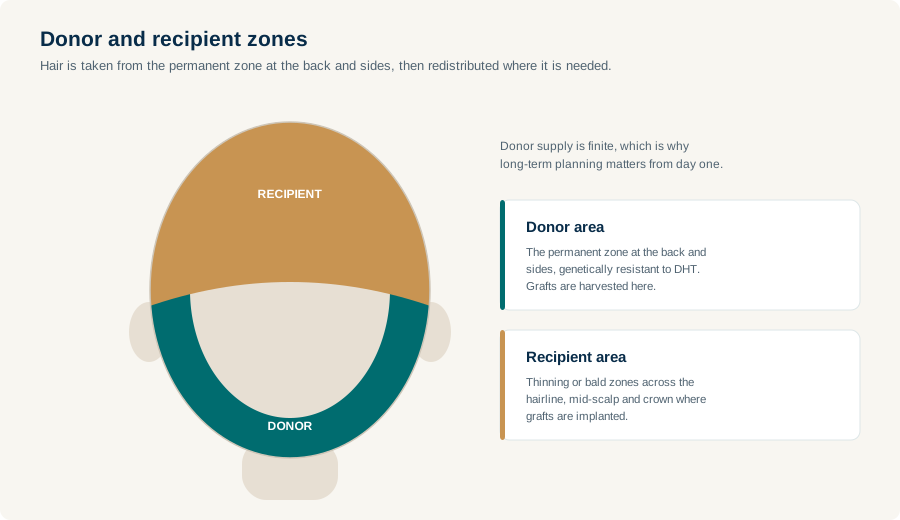
Because your donor supply is finite, the number of grafts available across your lifetime is fixed. A surgeon who takes too much in one session leaves you with nothing in reserve if your hair loss progresses. This is the single most common reason men come to us for repair work after treatment elsewhere.
The techniques we use
All modern hair restoration at our clinic is follicular unit extraction based, meaning individual follicular units are removed one at a time rather than a strip of scalp being cut out. What differs is how the graft is placed.
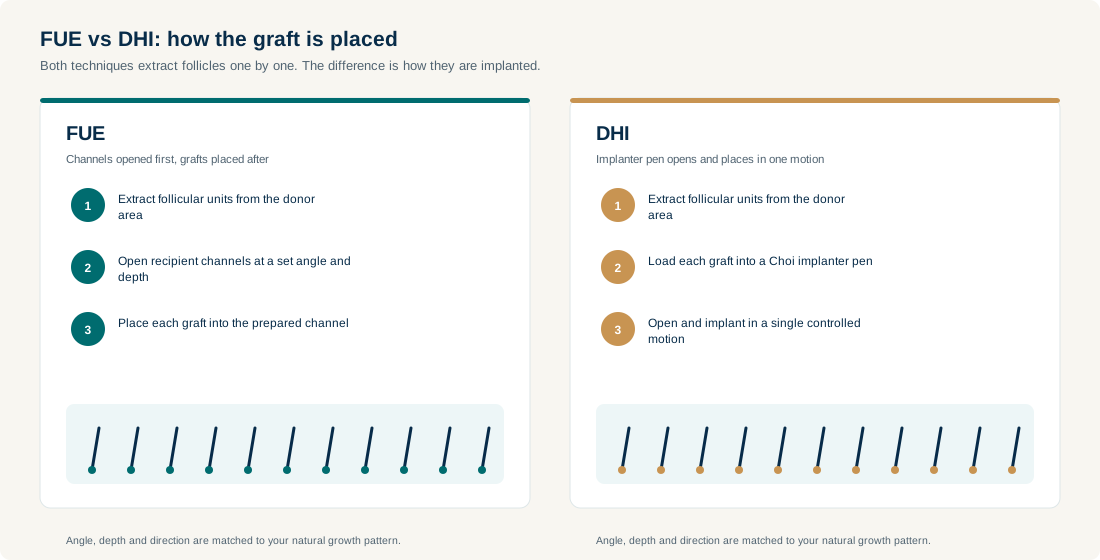
| Technique | Best suited to | Key characteristic |
|---|---|---|
| FUE | Larger sessions, full coverage | Channels are pre-made, allowing fast placement of high graft numbers |
| DHI | Hairlines, dense packing, no-shave cases | Implanter pen gives precise control over angle and depth |
| Sapphire FUE | Dense packing with fast healing | Sapphire blades create narrower channels than steel |
There is no universally superior technique. The right choice depends on your graft requirement, hair calibre, scalp laxity and whether you want to avoid shaving. We recommend a method after examining your scalp, not before.
What your treatment day looks like
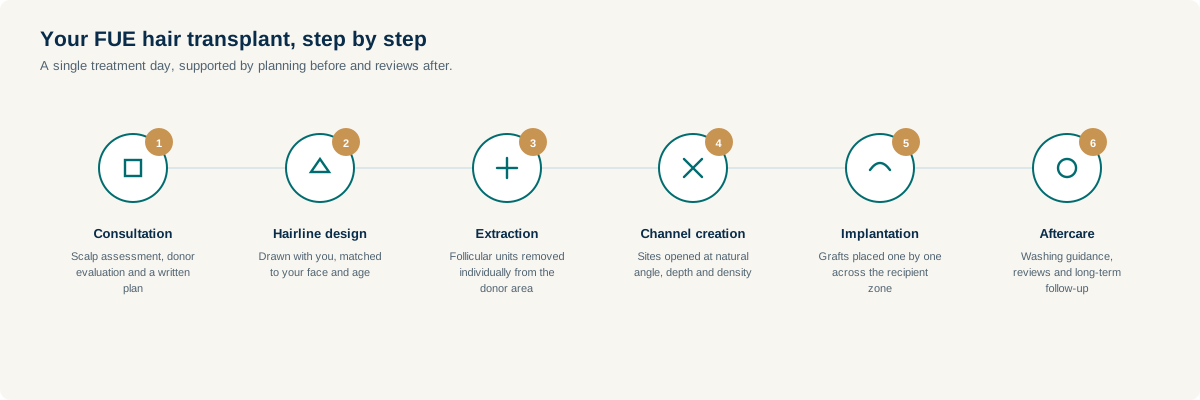
- Arrival and hairline designYour surgeon draws the planned hairline with you sitting upright, in a mirror, before anything else happens. You approve it or you change it.
- Local anaestheticThe scalp is numbed. You are awake throughout and can talk, listen to music, watch something or eat.
- ExtractionFollicular units are harvested individually from the donor zone and sorted by hair count under magnification.
- Channel creationRecipient sites are opened at the angle, depth and direction that match your natural growth pattern.
- ImplantationSingle-hair grafts go at the front edge, multi-hair grafts behind, building density where it reads best.
- Discharge and first reviewYou go home the same day with written aftercare, medication and a follow-up appointment already booked.
A typical session runs six to nine hours including breaks. You will be tired afterwards, but you are not sedated and you can travel home.
When you will see results
The timeline catches most men off guard, so it is worth setting expectations properly. Transplanted hairs shed between two and six weeks after the procedure. This is normal and expected. The follicle stays in place and re-enters its growth cycle.
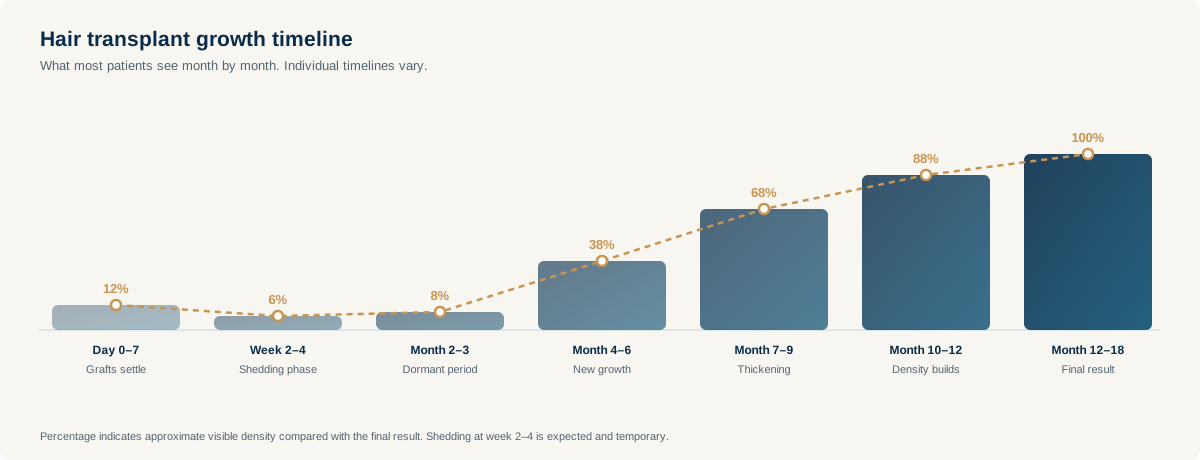
Meaningful growth starts around month four. By month eight you will look noticeably different in photographs. The final result, including full thickening of the individual hair shafts, is judged at twelve to eighteen months. Read our full recovery timeline for the detail.
What it costs
We quote a single, itemised figure in writing after your consultation. It covers the surgeon, the clinical team, the theatre, your medication, your take-home kit and every review appointment. Nothing is added afterwards.
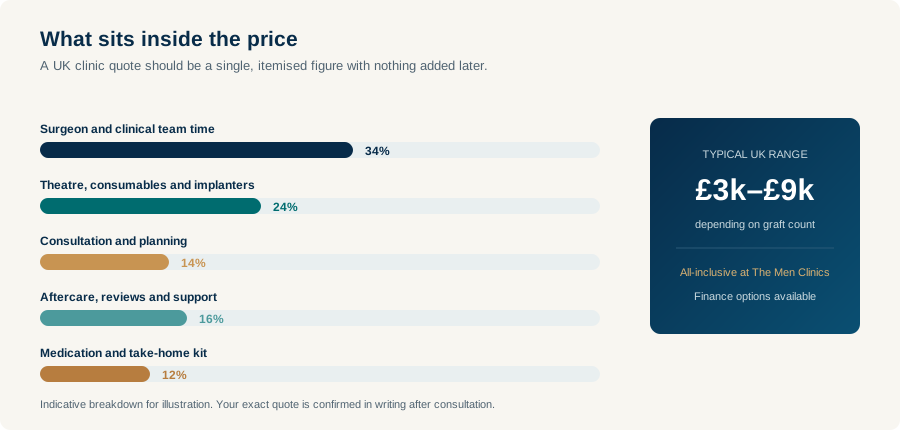
Graft count is the main variable. Our graft guide explains how the number is calculated, and our cost guide covers finance options and what a quote should include.
Are you a suitable candidate?
The strongest candidates tend to share a few features. You do not need all of them, but the more that apply, the more predictable the outcome.
- Hair loss that has been stable, or is being medically controlled
- A donor area with good density and hair calibre
- A pattern of loss that a finite donor supply can realistically cover
- Realistic expectations about density rather than teenage-level thickness
- General good health, with any relevant conditions well managed
Men in their early twenties with rapidly advancing loss are usually advised to stabilise medically first. Operating into an active, unpredictable pattern is how men end up with an isolated island of transplanted hair and no donor left to fix it.
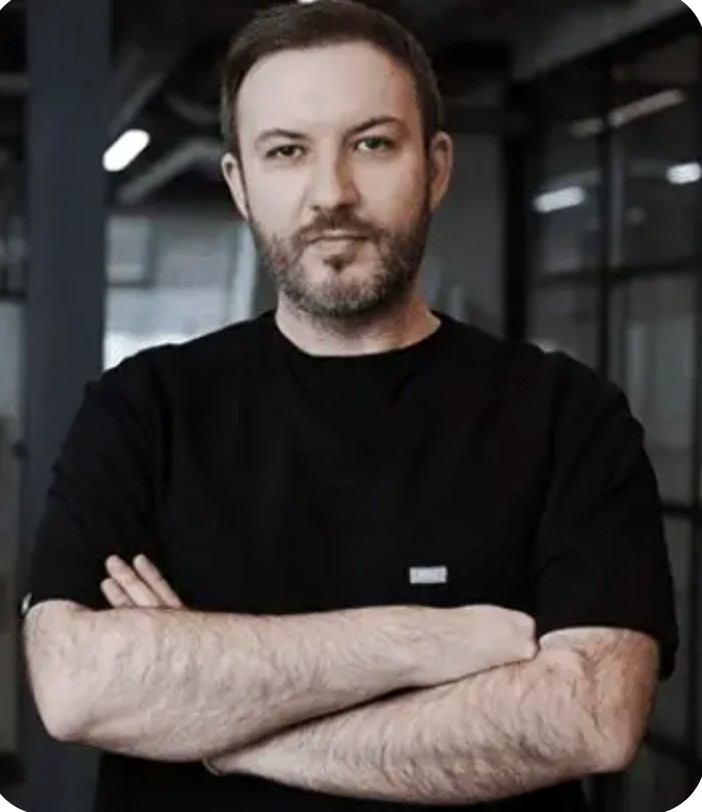 Clinically reviewed by Dr. Ducu Botoaca
Aesthetic & Hair Transplant Surgeon and founder of The Men Clinics, Soho, London. This page is general information and is not a substitute for a personal medical assessment.
Clinically reviewed by Dr. Ducu Botoaca
Aesthetic & Hair Transplant Surgeon and founder of The Men Clinics, Soho, London. This page is general information and is not a substitute for a personal medical assessment.
Frequently asked questions
Will a hair transplant look obvious?
Not when it is planned properly. Natural results come from three things: single-hair grafts along the front edge, an irregular rather than a ruler-straight hairline, and grafts placed at the same angle and direction as your original hair. The old pluggy look came from large multi-hair grafts placed at the wrong angle, which is not how modern follicular unit work is performed.
How long do I need off work?
Most men take seven to ten days. Redness and small crusts are visible during the first week and settle over the second. If your job is desk-based and you are comfortable with colleagues knowing, some men return after four or five days with a loose cap.
Does it hurt?
The local anaesthetic injections sting for a few minutes at the start. After that the scalp is fully numb and the procedure is not painful. Most men describe the following night as an ache rather than pain, controlled easily with simple analgesia.
Will the transplanted hair fall out later?
The transplanted follicles are taken from the DHT-resistant zone, so they behave like donor hair and are permanent. However, your untransplanted native hair can continue to thin around them, which is why a long-term medical plan matters as much as the surgery.
Can I have a transplant if I am completely bald?
It depends on your donor area rather than your recipient area. Advanced Norwood VI and VII patterns have a large area to cover and a reduced donor supply, so full coverage is often not achievable. A realistic plan may prioritise the frontal third, which frames the face and delivers the biggest visual change.
How many procedures will I need?
Many men achieve their goal in one session. A second, smaller session is sometimes planned from the outset for the crown, or later if hair loss progresses. We tell you at consultation if we think you will need more than one.
EXPLORE MORE
Other treatments
Ready to talk to a specialist?
Book a free, no-obligation consultation at our Soho clinic. You will get an examination, an honest assessment and a written plan with no deposit requested on the day.
The information on this page is general guidance and is not medical advice. It does not replace a personal consultation with a qualified clinician. Individual results vary. The Men Clinics, Soho, London.